
Exploring the realm of commercial roofing service agreements unveils a crucial aspect of project management. By delving into the intricacies of service agreements, both contractors and clients can ensure a smooth and successful collaboration.
Detailing the key components and legal considerations within these agreements sheds light on their significance in the roofing industry.
Importance of Commercial Roofing Service Agreements

Having a detailed service agreement is crucial for commercial roofing projects to ensure clarity, transparency, and protection for both parties involved. A well-crafted service agreement Artikels the scope of work, timelines, costs, responsibilities, and any other important details related to the roofing project.
Key Components of a Commercial Roofing Service Agreement
- Scope of Work: Clearly define the specific tasks to be completed, materials to be used, and any limitations or exclusions.
- Timeline: Establish a timeline for the project, including start and completion dates, milestones, and any potential delays.
- Pricing: Artikel the total cost of the project, payment schedule, and any additional fees or charges that may apply.
- Insurance and Liability: Specify insurance coverage, liability limits, and any warranties or guarantees provided by the roofing contractor.
- Termination Clause: Include terms for terminating the agreement, such as breach of contract, non-payment, or other unforeseen circumstances.
Benefits of Clearly Defined Service Agreements
- Clarity: Avoid misunderstandings or disputes by clearly outlining expectations and responsibilities for both parties.
- Protection: Provide legal protection for both the roofing contractor and the client in case of disagreements, delays, or unforeseen circumstances.
- Quality Assurance: Ensure that the project is completed to the agreed-upon standards, with no room for ambiguity or misinterpretation.
- Professionalism: Demonstrate professionalism and commitment to quality work by having a detailed service agreement in place.
Legal Aspects in Commercial Roofing Service Agreements
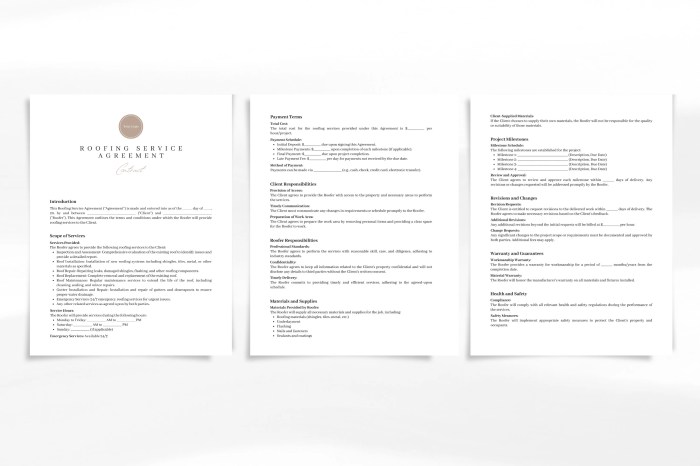
![Free Printable Roofing Contract Template [PDF, Excel, Word] Examples ...](https://tour.cakrawala.co/wp-content/uploads/2026/05/commercial-roofing-maintenance-service-agreement-hafn8.jpg "Free Printable Roofing Contract Template [PDF, Excel, Word] Examples ...")
When entering into a commercial roofing service agreement, it is crucial to consider the legal aspects that can protect both parties involved. A well-drafted service agreement can Artikel the responsibilities, expectations, and rights of each party, reducing the likelihood of disputes or issues down the line.
Legal Considerations in a Commercial Roofing Service Agreement
- Scope of Work: The agreement should clearly define the scope of work to be performed, including details on materials, timeline, and deliverables.
- Payment Terms: It is important to Artikel the payment terms, including the total cost, payment schedule, and any penalties for late payments.
- Insurance and Liability: The agreement should address insurance coverage for both parties and Artikel liability in case of accidents or damages during the project.
- Termination Clause: Including a termination clause can specify the conditions under which either party can end the agreement, protecting both parties in case of unforeseen circumstances.
Protection through Well-Drafted Agreements
A well-drafted service agreement can provide protection by clearly outlining the rights and obligations of each party. In case of disputes or issues, the agreement serves as a reference point to resolve conflicts and avoid costly legal battles. By specifying expectations and responsibilities upfront, both parties can ensure a smoother project process and minimize the risk of misunderstandings.
Importance of Compliance with Local Regulations
Ensuring compliance with local regulations and building codes within the service agreement is essential to avoid legal repercussions and ensure the safety and quality of the roofing project. By incorporating these requirements into the agreement, both parties can demonstrate their commitment to upholding standards and regulations set by local authorities, reducing the risk of penalties or project delays.
Pricing and Payment Terms
When it comes to commercial roofing service agreements, outlining clear pricing and payment terms is crucial to ensure a smooth working relationship between the service provider and the client. By clearly defining the pricing structures and payment terms, both parties can avoid misunderstandings and payment delays, leading to a more efficient and satisfactory experience.
Pricing Structures
- Flat Fee: A fixed amount agreed upon for specific roofing services.
- Hourly Rate: Charging based on the number of hours worked on the project.
- Cost-Plus: Adding a markup to the actual cost of materials and labor.
Payment Terms
- Deposit: A percentage of the total cost paid upfront before work begins.
- Progress Payments: Payments made at different stages of the project completion.
- Final Payment: The remaining balance paid upon successful completion of the roofing project.
Clear pricing and payment terms can prevent misunderstandings by ensuring both parties are on the same page regarding costs and payment schedules. It also helps in avoiding payment delays as the terms are clearly stated in the agreement, leaving no room for confusion or disputes.
This transparency fosters trust and accountability in the business relationship, benefiting both the roofing service provider and the client.
Warranty and Maintenance Obligations
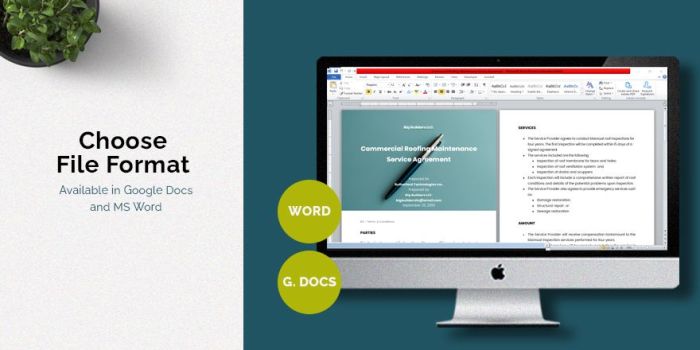
When it comes to commercial roofing service agreements, it is crucial to have clear and detailed warranty terms in place to protect both the contractor and the client. In addition to warranties, defining maintenance obligations is equally important to ensure the longevity and performance of the roofing system.
Warranty Terms
- Include the duration of the warranty period, specifying whether it is limited or full coverage.
- Clearly Artikel what aspects of the roof are covered under the warranty, such as material defects, workmanship issues, or leaks.
- Define the process for making warranty claims, including who to contact and the timeframe for resolution.
- Specify any exclusions or limitations to the warranty, such as damage caused by severe weather or improper maintenance.
Maintenance Obligations
It is essential to establish maintenance obligations for both the contractor and the client to ensure the roof remains in optimal condition throughout its lifespan.
- The contractor should Artikel the maintenance tasks they will perform regularly to uphold the warranty and prevent issues.
- The client's responsibilities, such as conducting routine inspections and promptly addressing any maintenance issues, should be clearly defined.
- Regular maintenance not only extends the life of the roof but also helps identify and address problems early, saving both parties time and money in the long run.
Ensuring Clarity
- Use clear and concise language when outlining warranty and maintenance terms to avoid any confusion or misinterpretation.
- Provide a detailed schedule or checklist of maintenance tasks to be completed by both parties to ensure compliance.
- Consider including a provision for regular inspections by the contractor to assess the roof's condition and address any potential issues proactively.
- Review the warranty and maintenance terms with the client before signing the agreement to ensure mutual understanding and agreement on all obligations.
Conclusion
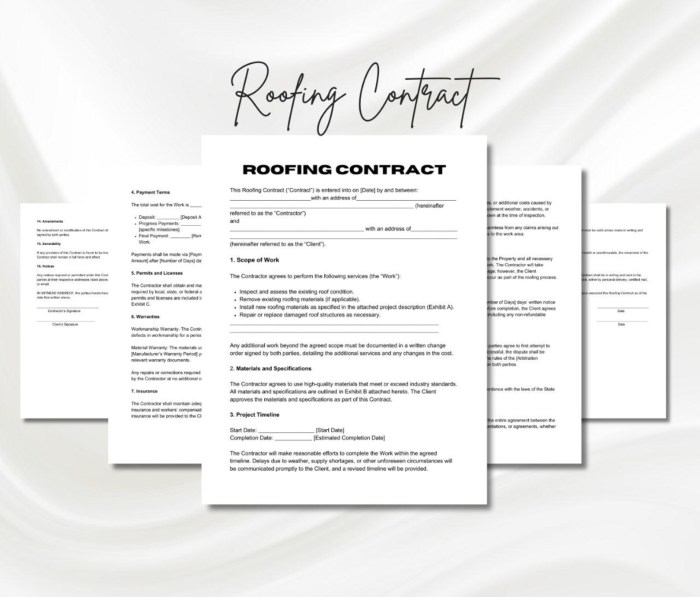
In conclusion, commercial roofing service agreements serve as a cornerstone for establishing clear expectations and responsibilities. By incorporating detailed pricing structures, warranty terms, and maintenance obligations, parties can navigate projects with confidence and clarity.
FAQ Summary
What key components should be included in a commercial roofing service agreement?
Key components include scope of work, project timeline, payment terms, warranty details, and maintenance obligations.
How can a well-drafted service agreement protect parties in case of disputes?
A well-drafted agreement can clearly Artikel responsibilities, reducing ambiguity and providing a basis for resolving conflicts.
What are common payment terms in commercial roofing service agreements?
Common payment terms include milestone payments, percentage of completion, or lump sum payments upon project completion.
Why is compliance with local regulations important in service agreements?
Compliance ensures that roofing projects meet legal standards, safeguarding both parties from potential legal repercussions.
How can clear pricing and payment terms prevent misunderstandings?
Clear terms leave no room for interpretation, reducing the likelihood of disputes and ensuring timely payments.